BMI Calculator editors
Editorial desk
The editorial desk behind this guide. Every threshold on the site names the body that set it and the year; every calculator states its own margin of error.
Editorial standards
- No paid placements. We do not accept payment for a placement, a ranking or a favourable review. Where a link earns a commission, the page carrying it says so.
- No untested claims. We do not say we have tried something we have not. Prices and plan details supplied by a provider are labelled as indicative rather than presented as our own findings.
- No page for the sake of a keyword. A destination gets a page when there is something specific to say about it. That is why the site is small.
- Corrections are made in public. A factual fix is applied to the page and the update date changes with it.
62 pages by BMI Calculator editors
-
 Tracking Weight Over Time Without Overinterpreting Daily Fluctuations
How to track body weight over time using moving averages to distinguish real change from the 1–2 kg daily fluctuation caused by glycogen, sodium, and hydration.
-
 BMI with Amputation, Limb Difference, and Wheelchair Use: Correction Factors
-
 Infant Growth Monitoring: Why BMI Is Not Used Below Age Two and What Replaces It
How infant growth is measured using weight-for-length and head circumference, why BMI is not used below age two, and what WHO growth standards actually describe.
-
 BMI Thresholds in Surgery, Fertility Treatment, Insurance and Employment
Where BMI is used as an institutional gate for surgery, fertility treatment, insurance, and employment, with the evidence and criticism attributed to each issuing body and year.
-
 Maintaining Weight After Losing It: What the National Weight Control Registry Data Shows
The National Weight Control Registry describes people who have maintained weight loss; common behaviours include high physical activity and self-monitoring, but the sample is self-selected.
-
 Visceral Fat and Why Location Matters: The Metabolic Difference From Subcutaneous Fat
Visceral fat surrounds the organs and is metabolically distinct from subcutaneous fat under the skin. Learn why location matters, how CT and MRI measure it, and what waist circumference cannot tell you.
-
 BMI Prime, Ponderal Index, and the Alternatives Proposed to Fix BMI
BMI prime divides a person's BMI by the WHO upper limit of 25. The ponderal index uses height cubed. Neither has replaced BMI in global screening guidance.
-
 Waist to Height Ratio Calculator NICE CG189 0.5 Boundary and Measurement Protocol
The waist-to-height ratio calculator uses the NICE CG189 0.5 boundary. This is a population heuristic, not a personal risk score, and the result depends on the measurement protocol used.
-
 BMI Units and Conversions: Metric, Imperial, and Stones with Rounding Rules
Exact conversion factors for BMI units across metric, imperial, and stones, with worked examples showing how rounding during conversion can change a WHO category.
-
 Ethnicity and BMI: Why Different Populations Need Different Thresholds
-
 Childhood Obesity Prevalence Data by Country and Year, with Source Attribution
Childhood obesity prevalence figures from WHO, CDC, and national surveys, with the year, source, and percentile cut-off stated for every statistic.
-
 Underweight Health Risks: What a BMI Below 18.5 Is Associated With
A BMI below 18.5 is associated with higher mortality, osteoporosis, and impaired immunity in observational studies, but reverse causation and smoking confound the relationship.
-
 Metabolic Adaptation and Weight Loss Plateaus: What the Research Shows About Expenditure Falling
Metabolic adaptation is the reduction in energy expenditure beyond what mass loss predicts; plateaus have multiple causes including adherence decay and NEAT reduction.
-
 Smart Scales and Bioimpedance: Why the Reading Moves With Hydration
Smart scales use bioelectrical impedance analysis to estimate body fat, but readings shift with hydration and carry ±3–8 percentage points of error against DXA. Learn what the number is actually worth.
-
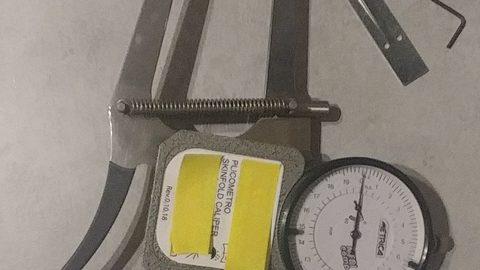 BMI vs Body Fat Percentage: What Each Measures and Where They Disagree
BMI is a weight-for-height ratio that measures no fat at all. Body fat percentage measures adipose tissue directly. They correlate in populations but diverge in individuals.
-
 Ideal Body Weight Formulas Devine Robinson Miller Hamwi Origins and Disagreement
Devine, Robinson, Miller, and Hamwi ideal body weight formulas originated in clinical dosing or insurance tables, not health standards. They disagree because they were derived from different populations and purposes.
-
 How Accurate Are Bathroom Scales? Tolerance, Drift, and Calibration Explained
How accurate consumer bathroom scales are, the factors that cause drift and variation, and a procedure for checking your scale against a known reference weight.
-
 BMI in Very Short and Tall People: The Height Scaling Problem Explained
BMI divides weight by height squared, but bodies are three-dimensional. For very short and very tall people, this arithmetic distorts risk classification—here is by how much and what to use instead.
-
 Talking to a Child About Weight: What Paediatric Guidance Says
What paediatric guidance from AAP, NICE, and the Royal College of Paediatrics says about talking to a child about weight, and what the evidence says not to do.
-
 Metabolically Healthy Obesity: What the Term Means and How Stable It Is
Metabolically healthy obesity describes people with BMI ≥30 and normal metabolic markers, but the phenotype is often transient and still carries elevated long-term cardiovascular risk.
-
 How Fast Weight Can Safely Change: Rate of Weight Loss Guidelines and the First Week
Clinical guidelines recommend modest weekly rates; the first week's rapid drop is mostly water and glycogen, and very fast loss carries documented gallstone risk.
-
 How body fat is measured Review: Specifications, Range and Who It Suits
What How body fat is measured claims, what owners report, and the one trade-off that decides whether it is the right machine.
-
 BMI Accuracy for One Person: Sensitivity, Specificity, and Misclassification
BMI misclassifies a substantial minority of individuals when measured against DXA body fat. It has moderate sensitivity and misses excess adiposity in many normal-weight adults.
-
 US Navy Body Fat Calculator Equation Error Margin Against DXA Explained
The body fat calculator uses the Hodgdon and Beckett 1984 US Navy circumference equation. Its standard error against DXA is typically several percentage points, varying by population.
-
 How to Measure Waist Circumference Accurately Using WHO and NIH Landmarks
Step-by-step protocol for measuring waist circumference using WHO and NIH landmarks, with the error each method removes and the difference the landmark choice makes.
-
 BMI and Pregnancy: Pre-Pregnancy BMI, Gestational Weight Gain Ranges, and Why BMI Is Not Read During Pregnancy
Pre-pregnancy BMI categories, IOM gestational weight gain ranges by category, and why BMI is not interpreted during pregnancy—with every threshold sourced to its issuing body and year.
-
 BMI Through Puberty: Why the Number Moves During Growth
Why a teenager's BMI changes during puberty, the normal trajectory of adiposity rebound and growth spurt, and why adult cut-offs do not apply.
-
 BMI and Cardiovascular Risk: What BMI Adds Once Blood Pressure and Lipids Are Known
BMI is associated with cardiovascular disease, but most of the risk is mediated through blood pressure, lipids, and glucose. Central adiposity markers add information BMI misses.
-
 What a Calorie Deficit Actually Does: The Arithmetic, Adaptation and the 3500 Calorie Rule
The 3500-calorie-per-pound rule is a static 1958 estimate; dynamic models show energy expenditure falls as mass is lost, and the first week's loss is mostly water.
-
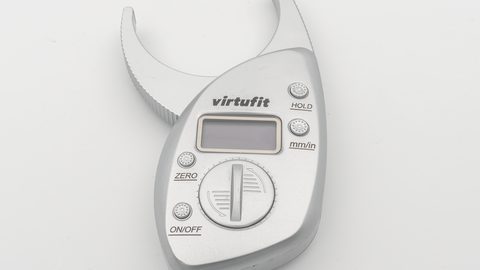 Body Fat Percentage Ranges by Sex and Age: What Any Method Can Tell You
Body fat percentage ranges differ by sex, age, and measurement method. Learn the published ranges, why a BIA number is not a DXA number, and the error margins that come with every method.
-
 History of BMI: From Quetelet's Average Man to a Global Screening Standard
BMI began as Adolphe Quetelet's 19th-century statistical description of the average man. Ancel Keys named it in 1972, and the WHO adopted it as a screening standard in 1995.
-
 TDEE Calculator Equations Mifflin-St Jeor Error Range and Activity Multipliers
The TDEE calculator uses the Mifflin-St Jeor equation with FAO/WHO/UNU 2001 activity multipliers. Individual error against doubly labelled water is typically ±15–25%.
-
 Measuring Height Accurately: The Errors That Move BMI by a Whole Point
-
 BMI in Older Adults: Why the Healthiest Range Shifts with Age and the Sarcopenia Problem
Why the healthiest BMI range shifts upward in older adults, how sarcopenia complicates BMI interpretation, and what measurements add useful information.
-
 Reading a Growth Chart: CDC and WHO Charts and Crossing Percentiles
How to read CDC and WHO growth charts, what centile lines represent, and what crossing percentiles means for a child's growth trajectory.
-
 BMI and Type 2 Diabetes Risk: The Gradient and Why It Starts Lower in Some Groups
Type 2 diabetes risk rises with BMI in all populations, but the gradient begins at a lower BMI in Asian groups due to greater visceral fat and insulin resistance at the same weight.
-
 Total Daily Energy Expenditure Explained: TDEE Components and Activity Multipliers
Total daily energy expenditure has four components; the physical activity multiplier is the weakest link, introducing individual error typically ±15–25% against doubly labelled water.
-
 Waist Circumference Thresholds by Sex and Population: Where the Tape Goes
Waist circumference thresholds differ by issuing body and population. Learn the NIH, WHO, and IDF cut-offs, where the tape goes according to each protocol, and the measurement error you should expect.
-
 BMI Categories and Where the WHO Cut-Offs of 25 and 30 Come From
The WHO adult BMI categories were fixed by an expert committee in the 1990s using epidemiological cut-points, not physiological thresholds. Every band names its source and year.
-
 BMI Calculator Explained: The Formula It Runs, the Categories It Reports, and the Rounding
The formula a BMI calculator runs, where the WHO 1995 classification categories came from, and how rounding during calculation can shift a person across a category boundary.
-
 How to Weigh Yourself So the Number Means Something: Time, Clothing, Frequency
-
 BMI in Athletes and Muscular Builds: How Far It Overstates Risk, with Measured Examples
How far BMI overstates health risk in athletes and muscular builds, with measured examples from published studies and alternative body composition methods.
-
 How Child BMI Percentiles Work and What They Actually Measure
Why a child's BMI is compared with other children of the same age and sex, what a percentile actually means, and why it is not a body fat measurement.
-
 BMI and Mortality: The J-Shaped Curve, Confounders, and the Evidence
Observational studies show a J-shaped relationship between BMI and mortality. Reverse causation and smoking confound the low end; Mendelian randomisation suggests a more linear causal effect.
-
 Basal Metabolic Rate Explained: BMR Equations, Error Ranges and Accuracy
Basal metabolic rate is measured under strict conditions; prediction equations estimate it with individual error typically ±10–20%, and some groups face systematic bias.
-
 Waist-to-Height Ratio: The 0.5 Rule and How to Measure Your Waist
The NICE CG189 (2022) guideline advises keeping waist-to-height ratio below 0.5. Learn what this ratio predicts, how it differs from BMI, and the correct waist measurement protocol with its error margins.
-
 What BMI is and how it is calculated Review: Specifications, Range and Who It Suits
What What BMI is and how it is calculated claims, what owners report, and the one trade-off that decides whether it is the right machine.
-
 Weight and Energy Balance Explained: BMR, TDEE, Deficit and Maintenance
How basal metabolic rate, total daily energy expenditure, calorie deficit and metabolic adaptation interact—explained through mechanisms, not prescriptions.
-
 When BMI Reads Wrong: Populations for Whom Standard BMI Misclassifies Health Risk
Which populations standard BMI misclassifies—athletes, older adults, pregnant women, and ethnic groups—and what measurements are used instead, with every threshold sourced.
-
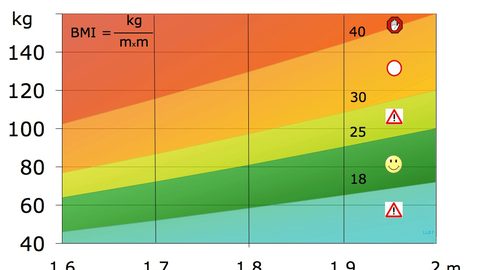 BMI Calculator: Understand Your Body Mass Index Number and Its Limits
Use this BMI calculator to see your number and learn what the WHO categories from 1995 actually mean for one person—and what they cannot tell you about your body.
-
 TDEE Calculator: Estimate Your Total Daily Energy Expenditure as a Range
Estimate your total daily energy expenditure and understand why the Mifflin-St Jeor equation produces a range, not a single accurate number for any individual.
-
 Body Fat Calculator: US Navy Method Estimate and Its Error Against DXA
Calculate your body fat percentage using the US Navy circumference method and learn how the estimate compares to DXA, including who it reads worst for.
-
 Ideal Weight Calculator: See the WHO Healthy BMI Range for Your Height
See the WHO healthy BMI weight range for your height and learn where the Devine, Robinson, Miller, and Hamwi formulas came from and why they disagree.
-
 Waist to Height Ratio Calculator: Measure Central Adiposity Risk at Home
Calculate your waist-to-height ratio and learn why NICE CG189 uses the 0.5 boundary, how to measure consistently, and how the WHO and NIH landmarks differ.
-
 Child BMI Calculator: Plot Your Child's Percentile on CDC Growth Charts
Calculate your child's BMI percentile using CDC 2000 growth charts and understand what a centile actually means—and why it is not a body fat measurement.
-
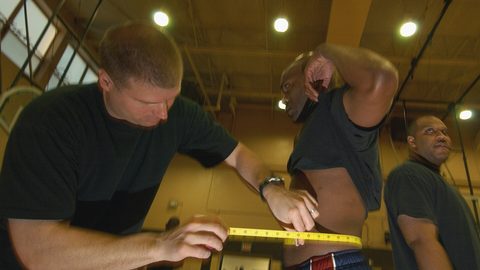 Body Composition Beyond BMI: Waist, Body Fat and Visceral Fat Guides
BMI measures weight-for-height, not body composition. This hub routes you to guides on waist-to-height ratio, body fat percentage, visceral fat, and muscle mass, with every threshold attributed to its source.
-
 BMI and Health Risk: What the Number Does and Does Not Predict
BMI is associated with mortality and disease risk at the population level, but the relationship is shaped by confounding, reverse causation, and body composition differences.
-
 Children and Teenagers BMI, Growth Charts and Percentiles Hub
How to understand a child's BMI result, growth chart position, and what it means for health, with every threshold attributed to its issuing body and year.
-
 Measuring Body Weight, Height, and Composition: A Guide to Getting Numbers That Mean Something
Self-reported numbers produce a BMI roughly 0.5-1.5 kg/m² lower than measured ones. These guides give you the protocol to close that gap, with the error size named for each step.
-
 Body Measurement Calculators: BMI, TDEE, Body Fat, and Waist Ratio Tools Explained
Route to the right body measurement calculator by what you are trying to understand, with every equation's source and margin of error stated before you enter a number.
-
 BMI Explained: What Body Mass Index Actually Measures and What It Misses
Body mass index explained: the formula, the WHO cut-offs from 1995, what BMI measures at population scale, and what it cannot tell any single person about their health.
-
 Understanding BMI: A Guide to Body Mass Index Screening and Its Limits
Understanding body mass index: a hub routing you to guides on BMI screening, measurement methods, population thresholds, and what BMI can and cannot tell you.