Body Fat Percentage: Healthy Ranges by Sex and Age and Method Error Margins
Body fat percentage ranges differ by sex, age, and measurement method. Learn the published ranges, why a BIA number is not a DXA number, and the error margins that come with every method.
Body Fat Percentage: What Any Method Can and Cannot Tell You
You cannot compare two body fat percentages taken from different devices and treat them as the same number. A reading from a bioelectrical impedance analysis (BIA) scale and one from a dual-energy X-ray absorptiometry (DXA) scan can differ by 3 to 8 percentage points for the same person on the same day.
The most common mistake is treating a single body fat percentage as a fixed health score. No universal standard exists across all assessment methods and populations. The ranges published by the American Council on Exercise (ACE) in 2009, Gallagher et al. in 2000, and other sources each came from a specific method applied to a specific group. Apply the wrong method's range to your number and you will misclassify yourself.
Body Fat Percentage Chart Men Women: The Most Frequently Cited Ranges
ACE Skinfold Ranges
The American Council on Exercise published the ranges most often repeated in gyms and health articles in 2009. ACE states that essential fat, the minimum required for physiological function, is 2-5% for men and 10-13% for women. These are ballpark figures based on skinfold data, not DXA or BIA.
Gallagher Age-Specific Ranges
Gallagher et al. (2000) produced a different set of sex-specific and age-specific ranges using a multi-method analysis. For men aged 20-39, the healthy range was approximately 8-20% body fat; for women the same age, 21-33%. For men aged 40-59, the range shifted to 11-22%; for women, 23-34%. For those 60-79, men 13-25% and women 24-36%. These values were derived from a combination of hydrostatic weighing and DXA across multiple studies.
Why The Method Matters
The key difference between these two popular references is the method. ACE's numbers come from skinfold calipers and carry an estimated error of ±3.5% body fat. Gallagher's numbers come from criterion methods and give a more accurate picture at the population level but still do not apply directly to your individual BIA scale reading.
Every range you see published must name the method it was derived from. If the source does not state whether it uses DXA, BIA, skinfolds, or hydrostatic weighing, you have no way to know if the number on your device belongs in that range.
Normal Body Fat Percentage by Method: Why the Number Changes Between Devices
BIA Scales
A BIA device has an individual error of ±3-5% body fat, and that error is heavily influenced by hydration status. Drink two litres of water before a BIA test and your body fat percentage can drop by two points. Dehydrate by skipping breakfast and it can rise by the same amount. The device's algorithm also matters: different manufacturers use different prediction equations, so two BIA scales from different brands can give you numbers that differ by 3 points or more on the same person at the same hydration state.
Skinfolds, BodPod and Hydrostatic Weighing
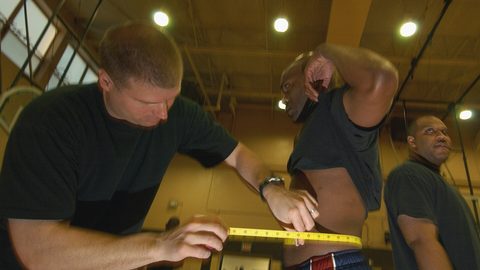
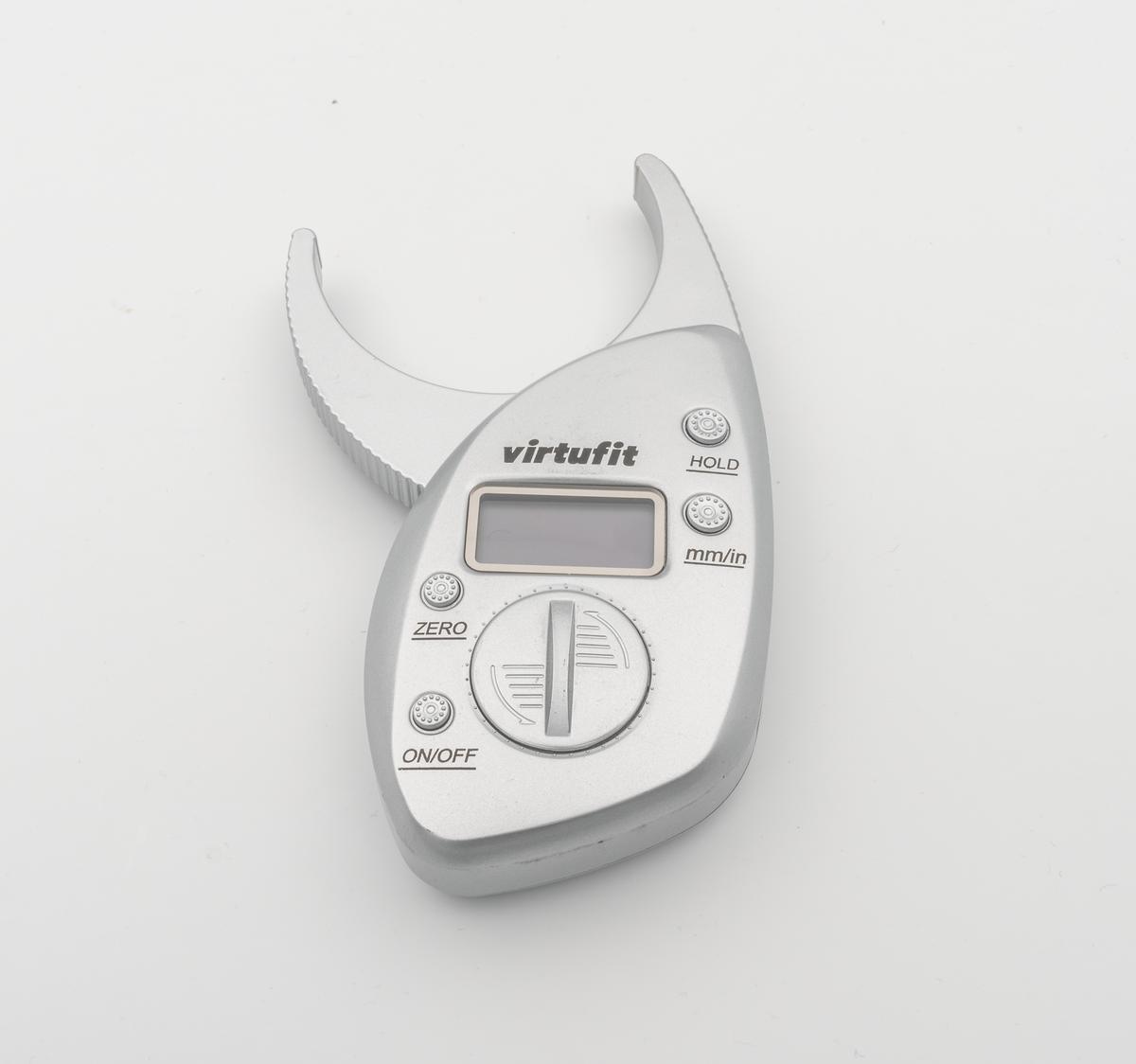
Skinfold calipers have a standard error of estimate of ±3.5% body fat when done by a trained technician using the Durnin and Womersley 4-site method (1974). Untrained users routinely double that error. The BodPod (air displacement plethysmography) has a standard error of ±2-3% against hydrostatic weighing. Hydrostatic weighing itself carries a ±2.0-2.5% error due to residual lung volume assumptions from the 1956 Siri equation.
DXA
A DXA scan has a precision error of ±1-2% body fat. It is the closest to a reference method available outside a research MRI, but even DXA has a ±1-2% error and its fat-lean partition differs from a four-compartment model.
This is not a defect of any single method. It is a constraint of indirect assessment. Every body fat percentage is an estimate, not a direct measurement.
When you see a chart that says "healthy body fat is 15-20% for men," you must ask: measured by what? A man who reads 15% on a BIA scale at home may be 20% on DXA, or 12% on skinfolds. Both numbers can be correct for the method used, but only one belongs in the range on that chart.
DXA Body Fat Reference Ranges: What the Research Standard Actually Shows
DXA reference ranges come from population studies that used DXA as the criterion method. The most commonly cited DXA-based ranges for adults are those from the American College of Sports Medicine (ACSM) guidelines, which give:
- Men 20-39 years: 8-19% body fat
- Women 20-39 years: 21-32% body fat
- Men 40-59 years: 11-21% body fat
- Women 40-59 years: 23-33% body fat
- Men 60-79 years: 13-25% body fat
- Women 60-79 years: 24-36% body fat
These numbers are higher than the ACE skinfold ranges because DXA tends to report slightly higher body fat percentages than skinfold calipers in the same person. If you have a DXA scan and compare it to an ACE chart, you will likely read as having a higher body fat percentage than the chart suggests is healthy. That is the method mismatch, not a change in your actual composition.
Body Fat Measurement Error: How Much Your Number Can Be Wrong
Device Error
The error margins for each method mean you cannot take a single reading as a precise truth. A BIA reading of 22% could represent a true value anywhere from 17% to 27% if the device has a ±5% error. A skinfold reading of 15% could be 11.5% or 18.5%.
The largest source of error for most people is the device itself. Consumer BIA scales use a single-frequency, foot-to-foot impedance reading that primarily measures the lower body. They cannot accurately assess trunk adiposity. The algorithms these scales use are proprietary and calibrated against a limited population, typically young, normal-weight adults. Their accuracy degrades in older adults, athletes, and people with obesity.
Hydration
Hydration is the second major error source. BIA works by measuring the resistance of body tissues to an electrical current. Water conducts electricity; fat does not. If you are dehydrated, the current meets more resistance and the device overestimates your fat-free mass, lowering your body fat percentage. If you are overhydrated, the opposite happens. The error can be 3-8 percentage points depending on the degree of dehydration.
What To Do
Never make a decision based on a single reading. Track the trend over weeks using the same device at the same time of day and the same hydration state: first thing in the morning, before eating or drinking, after voiding your bladder. If you use a BIA scale, accept that the absolute number is uncertain and look only at whether it is trending up, down, or stable.
What You Should Do Next
Stop comparing your number to charts from other methods. Write down the device brand, the conditions (time, hydration, last meal), and the date. Track the trend. A consistent downward or stable trend over three months is useful information. A single number compared to an internet chart is not.
The failure case: you buy a smart scale that claims DXA-level accuracy, take a reading, find it says 18%, compare it to a skinfold-based chart that says 18% is borderline, and decide you need to lose fat. In reality, your BIA scale may be reading 2-5 points lower than your true body fat, and you are already at a healthy level. You chase a number that was never a real target.
Common Questions
What body fat percentage is dangerously low?
Essential fat thresholds are 2-5% for men and 10-13% for women, per ACE. Dropping below these levels risks hormonal disruption, impaired immune function, and in women, loss of menstrual cycle. These numbers come from skinfold data; the equivalent DXA numbers would be approximately 1-2 points higher.
Can I have a normal BMI and too much body fat?
Yes. This condition is called normal-weight obesity. A person can have a BMI in the 18.5-24.9 range and still have excess body fat by DXA criteria. This is most common in older adults and certain ethnic groups, and it carries the same metabolic risks as higher BMI.
Does age change what a healthy body fat percentage is?
Yes. Age-related shifts in body composition mean the same percentage represents more fat at 60 than at 25 because fat-free mass declines with age. Gallagher's ranges shift upward by roughly 3-5 percentage points per decade after age 40.
Which body fat measurement method is most accurate?
DXA has the best precision for whole-body body fat percentage (±1-2%) among methods available outside a research lab. MRI is the gold standard for visceral adipose tissue but is not practical for routine use. BIA and skinfolds are less accurate but more accessible; use them for tracking trends only.
How often should I measure my body fat percentage?
Once every 2-4 weeks under the same conditions. Daily readings are noise, not signal, because hydration and food intake cause day-to-day variation that is larger than any real change in body fat. Take the average of three consecutive morning readings for a more stable number.