How to Measure Height Accurately and Why It Matters for BMI
How to Measure Height Accurately and Why It Matters for BMI
A 2 cm error in your height measurement shifts your BMI by roughly 0.7 to 1.0 kg/m², depending on your weight. That is enough to cross a WHO BMI category boundary, from normal to overweight, or from overweight to obese class I. Get the measurement right, or the number you are tracking means something different from what you think.
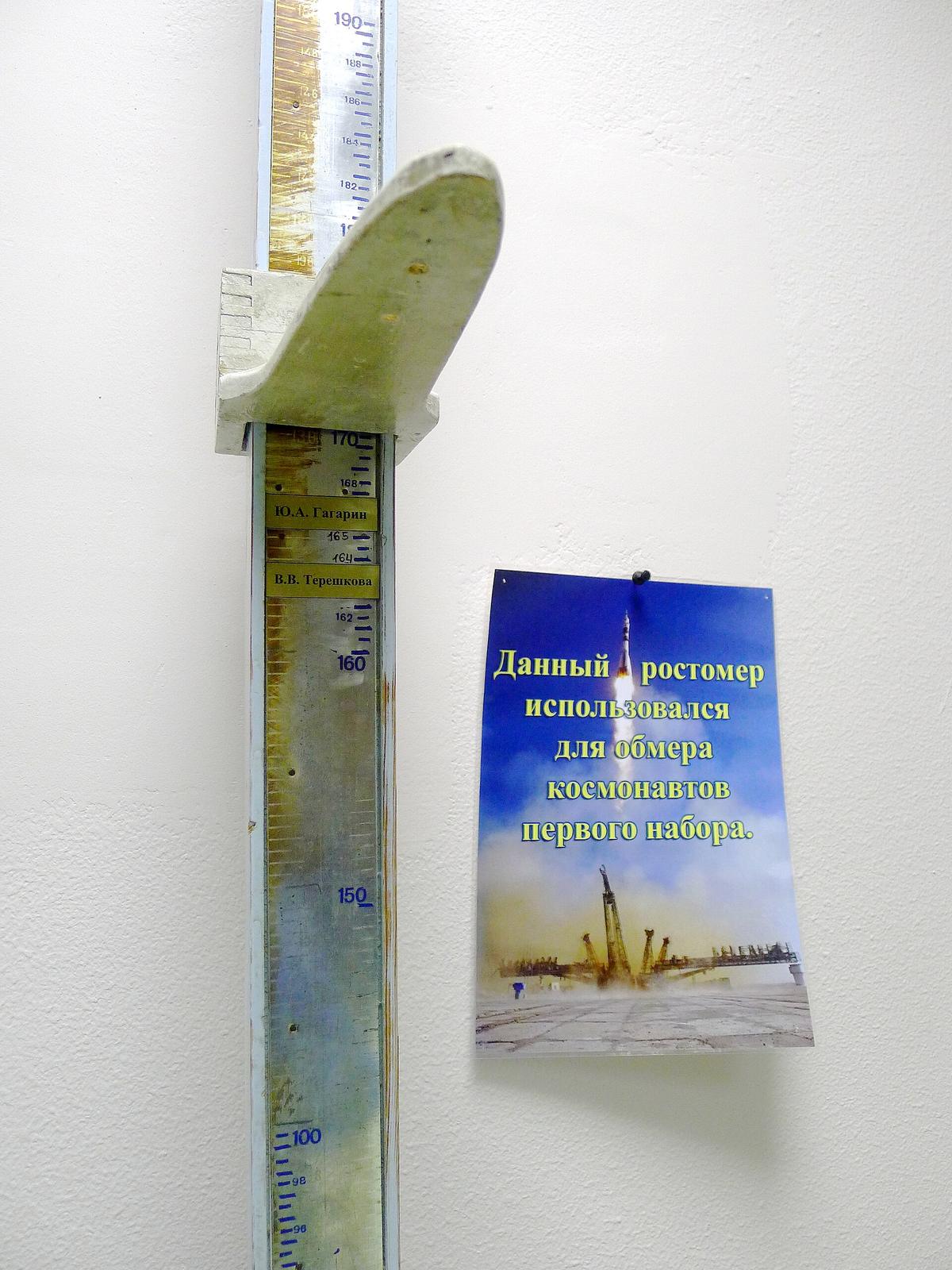
Height Measurement Error BMI Impact: The 2 cm Threshold
BMI is weight in kilograms divided by height in metres squared. A small height error becomes a larger BMI error because height is squared in the formula. The WHO adult cut-offs, underweight below 18.5, normal 18.5-24.9, overweight 25.0-29.9, obese 30.0 and above, are population screening bands, not individual diagnoses. But when you are using BMI to track your own risk or to interpret a number from a doctor, a scale, or an app, the accuracy of the input matters. An error in height distorts your place on the WHO 1995 cut-off grid.
What a 2 cm Error Does to Your BMI
At 80 kg and a true height of 170 cm, your BMI is 27.7, overweight. If you over-report height by 2 cm, BMI drops to 27.0, still overweight. At 75 kg and the same 2 cm over-report, BMI falls from 26.0 to 25.3, still overweight, but closer to the boundary. At the boundary (BMI 24.9 to 25.0), a 2 cm error can tip you into the overweight category, or keep you out of it. The direction is consistent: over-reported height lowers BMI, under-reported height raises it. Self-report height bias is the most common source of error.
Stadiometer vs Tape Measure Height: Protocol and Error
The standard protocol for measuring standing height at home uses a wall, a flat headboard, and the correct body position. You need a hard floor, a wall without a skirting board, and a right-angled object (a book, a clipboard, a set square) as the headboard. Stand with your back to the wall, heels together and touching the wall, buttocks and shoulder blades also against the wall. Your head must be in the Frankfort plane: an imaginary horizontal line from the lower edge of the eye socket to the upper edge of the ear opening. That means looking straight ahead, not up at the measurement. If you look up, your Frankfort plane tilts, and you gain a few millimetres that are not real height.
Stadiometer vs Tape Measure Height
A wall-mounted stadiometer is the gold standard. It costs roughly £50 to £100 for a home model. The measurement error is ±0.1 to ±0.5 cm with correct use. A tape measure held by hand introduces parallax error: the angle of your eye relative to the tape changes the reading. The error from a hand-held tape is ±0.5 to ±1.5 cm, enough to shift BMI. A portable stadiometer, the type used in mobile clinics, has a measurement error of ±0.3 to ±0.8 cm. If you must use a tape measure, fix it to the wall with masking tape at exactly 90° to the floor, then use the headboard against the tape. Do not hold the tape.
Measuring Height at Home Protocol
Measure at the same time of day every time. Spinal compression during the day reduces height by 1 to 2 cm. The best time is first thing in the morning, after getting out of bed but before any standing activity. Take three measurements and use the average. Record the height in centimetres, not feet and inches. Convert the number to metres by dividing by 100. Square it for the BMI formula. Do not round the height down to the nearest whole centimetre before squaring; round after the final BMI number.
| Method | Typical Error (cm) | Cost | Best Use |
|---|---|---|---|
| Wall-mounted stadiometer | ±0.1 to ±0.5 | £50–£100 | Home or clinic, gold standard |
| Portable stadiometer | ±0.3 to ±0.8 | £30–£60 | Mobile clinics, field research |
| Tape measure (fixed to wall) | ±0.5 to ±1.0 | £2–£5 | Home with careful setup |
| Tape measure (hand-held) | ±1.0 to ±1.5 | £2–£5 | Not recommended; parallax error |
| Self-reported height | +0.6 to +1.2 (overestimation) | Free | Avoid for BMI; systematic bias |
Self-Reported Height Overestimation and Age-Related Height Loss
Self-Reported Height Overestimation: The Systematic Bias
A systematic review by Gorber et al. (2007) found that self-reported height overestimates measured height by 0.6 to 1.2 cm on average. The overestimation is larger in men, older adults, and people with higher BMI. Weight is under-reported by 0.5 to 2.0 kg in the same populations. The combined effect shifts self-reported BMI downward by roughly 0.5 to 1.5 kg/m². That is a systematic bias, not random noise. If you are using a number from a doctor's office that asked 'How tall are you?' without measuring, treat the resulting BMI as a lower-bound estimate, not the real value.
Height Loss With Age BMI Effect
After age 50, vertebral disc compression and osteoporosis cause height loss of 2 to 5 cm. The loss accelerates in women after menopause and in both sexes with poor bone health. If you do not remeasure your height every two to three years after age 50, your BMI will be artificially inflated because the height in the formula is too large. A 3 cm height loss at age 60 with stable weight raises BMI by about 0.8 kg/m², enough to move a person from the top of normal into the overweight band. WHO 1995 cut-offs do not adjust for age. The NICE CG189 guideline (2022) does not address age-related height loss either. You must account for it yourself.
Measuring Height When You Cannot Stand
For people who cannot stand for a height measurement, wheelchair users, people with mobility limitations, or those who cannot maintain the Frankfort plane, two alternatives exist. Demispan is the distance from the midline of the sternum (the notch at the top of the breastbone) to the tip of the middle finger, with the arm extended sideways at shoulder height. Knee height is measured from the sole of the foot to the top of the knee, with the knee bent at 90° and the ankle at 90°. Both are measured with an anthropometric calliper or a stadiometer adapted for seated use. Equations convert these measurements to estimated standing height. The equations are population-specific and carry error of ±2 to 4 cm. Do not use a generic conversion found online; use the equation validated for your population by the issuing body (WHO, NICE, or national health authority).
Common Questions
How much does height change during the day?
Spinal compression from standing and gravity reduces height by 1 to 2 cm from morning to evening. Measure at the same time each day, first thing after waking.
Can I use a tape measure on a door frame?
Yes, if the door frame is on a flat wall. Use the same protocol: heels and buttocks against the frame, headboard against the tape. Do not measure from the floor to the mark on the frame alone.
Does height loss from osteoporosis affect BMI permanently?
Yes. Height loss from spinal changes is cumulative and irreversible. Remeasure your height every two years after age 50 to keep BMI accurate.
What if I cannot stand for a height measurement?
Use demispan or knee height with a validated conversion equation for your population. These alternatives carry ±2 to 4 cm error. Use them only when standing height is not possible.
.jpg)